

If you’ve ever wondered, “Can I adopt my sibling?”, you’re not alone. In many families, older siblings unexpectedly find themselves in the role of caregiver. It can be from the death of a parent, illness, abuse, neglect, or other family troubles. Sibling adoption can help keep brothers and sisters together in a safe, caring environment in certain situations.
Table of Contents:
- Can You Adopt Your Brother or Sister?
- What Is Sibling Adoption?
- When Can I Take My Brother or Sister?
- Who Is Eligible to Adopt a Sibling Legally?
- Legal Considerations for Sibling Adoption
- What the Adoption Process Involves?
- Why You Should Follow Your Sibling
- Challenges You Will Face
- Sibling Adoption Alternatives
- Common Mistakes
- FAQs
- Reasons to Work With an Adoption Attorney
Can You Adopt Your Brother or Sister?
The answer is yes, concisely. In many circumstances, if you match the legal criteria of your state and the court determines that adoption is in the best interest of your sibling, you can adopt your sibling.
Several elements determine whether you can you adopt your sibling, such as:
- How old you are
- Your brother or sister
- Your financial stability
- Whether the rights of the biological parents were voluntarily relinquished or terminated
- Your state’s adoption laws
- The wishes of the child (if old enough)
- Court’s finding regarding the child’s best interests
Sibling adoptions are not like agency adoptions as they typically involve family members that already have a relationship. That makes the legal process a little different.
If the environment is safe, it is frequently best for children to remain with their biological family. Even adopted siblings still have to prove they can create a safe, stable, and caring family.
What is Sibling Adoption?
Sibling adoption is the adoption of a biological brother or sister.

When adoption is complete:
- The adopted sibling is the child’s legal parent.
- The legal partnership is long-lived.
- The adoptive parent has complete parental rights.
- He’s an adoptee. The adopted sibling is given the same legal protections as any adopted child.
Biologically, it’s the same; legally, it’s parent and kid.
This setup is common when:
- Parents die.
- Parents lose custody.
- Her parents are in jail.
- Parents have a chronic sickness.
- Parents battle addiction
- Children are taken into foster care.
- Older siblings have already experienced the role of caregiver.
When Can I Take My Brother or Sister?
Many of those who inquire if they can adopt their sibling are already caring for a younger brother or sister.
If: Adoption might be possible
My parents are dead
If both parents are deceased, the court must establish who is in the best position to care for the child.
Keeping family is frequently ideal for the child. So the court may consider an adult sibling first before looking at unrelated adoptive families.
Parental consent (voluntary)
Parents can voluntarily give their child up for adoption if they believe another family member could provide better long-term care.
Generally, consent must be:
- Voluntary in writing
- Court-approved
Parents Lose Their Rights
A court can terminate parental rights for:
- Extreme neglect
- Abuse
- Abandonment
- Long-term drug use
- Long-term imprisonment
- Lack of support for the child
If the parental rights are dissolved, adoption is a possibility.
Cases of Foster Care
An adult sibling who is eligible under state law may request to adopt a sibling placed with them in foster care.
Many states emphasize relative placements for children when appropriate
Who Is Eligible to Adopt a Sibling Legally?
It takes more than just a brother or sister to adopt. Courts generally look at whether the potential adoptive parent can provide a secure and stable environment.
Usual factors include:
Age
Most states require an adoptive parent to be an adult, usually 18 or 21 years old.
Financial security
You do not need to be rich.
But you must normally be able to provide:
- Housing Food Clothing Education
- Health care
- Daily needs
Stable Home
The court seeks evidence that the child will be able to:
- Secure housing
- Regular procedures
- Emotional support
- Good supervision
Good Moral Character
Background checks usually include:
- Previous convictions
- Records of the child abuse registry
- Previous custody issues
Physical & Emotional Capacity
The court considers if the adoptive sibling can provide for the child’s requirements, in the long run, emotionally, educationally, and physically.
Legal Considerations for Sibling Adoption
Though each state has its own adoption regulations, the procedure normally includes several similar steps.
How to File a Petition?
The potential adoptive sibling files a petition in the proper court for adoption.
Home Study
In many jurisdictions, you will need to have a home study done by a qualified social worker.
The home study consists of:
- Security at home
- Financial means
- Family connections
- Ability to parent
- Bibliography References
- reference checks
Background Investigation
Typical applicant experiences include:
- FBI fingerprinting
- Checks on criminal records
- Checks of the child abuse registry
Interviews
Interviewing social workers:
- The sibling of choice
- The kid
- Other members of the household
- Educators
- Family members
Hearing in Court
A judge will consider all of the information and decide if adoption is in the best interest of the kid.
What the Adoption Process Involves
While the process may differ from state to state, these are the general steps for sibling adoption.
Step 1: Meet with an Adoption Attorney
An attorney will explain your state’s legislation and see if you qualify.

Step 2: Collect Documents
Common documentation consists of:
- Certificates of birth
- Financial statements
- Employment data
- Medical documentation
- Recognizing
- Housing Details
Step 3: Get the Necessary Consents
Consent may be necessary from: Depending on the case:
Biological parents:
- Protectors
- Children’s services agencies
- The child (if old enough)
Step 4: Finish Home Study
A competent expert evaluates your condition and residence.
Step 5: Go to Court
A judge next evaluates the evidence and decides whether to allow the adoption.
Step 6: Finalization
If authorized, the court will issue an adoption decree, establishing a permanent legal parent-child relationship.
Why You Should Follow Your Sibling?
Adopt your brother or sister, and you will lock in long-term stability and security for the two of you.
Keeping the Family Together
Children with trusted family frequently have less trauma.
Emotional Stability
Living with an elder sibling may reduce:
- Nervousness.
- Fear.
- Behavior problems
- Problems with adjustment
Legal Certainty
Adoption is a permanent legal tie of family, unlike temporary guardianship.
Stability in Schooling
Children often remain in the same:
- School Community
- Circles of friends
Financial Security
Adoption allows parents to make decisions on:
- Medical care
- education
- insurance
- Social welfare benefits
Challenges You Will Face
Sibling adoption has numerous advantages, but it also has additional responsibilities.
Financial Obligations
Parents are responsible for:
- Daily expenditures
- Childcare Healthcare Education
- After-school activities
Emotional Adjustment
It may be emotionally challenging for both of you to become legal parents instead of merely siblings. Family counseling may help smooth the transition.
Court Procedure
There are documentation, hearings, investigations, and waiting periods that can take months.
Family Dispute
Sometimes there are disagreements concerning custody or adoption among extended family members. It is therefore vital to acquire legal guidance.
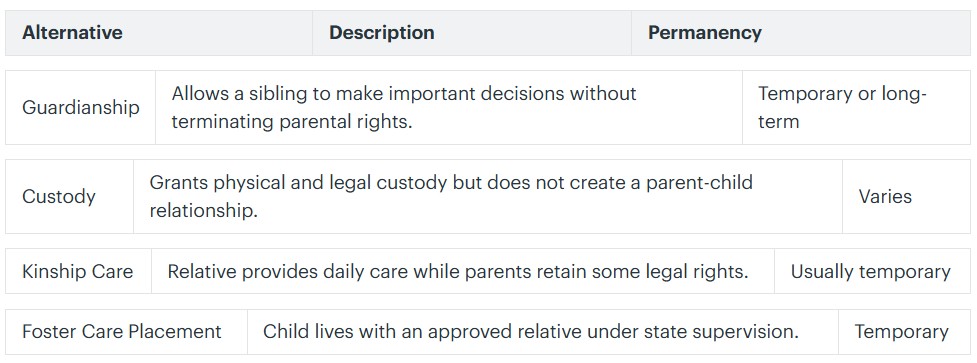
Sibling Adoption Alternatives
If adoption isn’t an option right now, other legal avenues may assist in protecting your sibling.
Temporary State Laws and Their Importance
There is no one federal statute that covers adoption by siblings.
Each state writes its own rules on:
- Minimum age requirements
- Requirements for consent
- Times of waiting
- Requirements for home study
- Processes of relative adoption
- Court proceedings
Laws differ widely from state to state; therefore, it is necessary to speak to an attorney who understands the adoption laws in your jurisdiction.
Financial Support for Careers Siblings
Many people who look after a younger brother or sister are concerned about the costs.
Depending on your situation, help may be accessible through the following:
- Programs for kinship care
- Adoption assistance subsidies;
- Medicaid—
- Children’s health insurance programs
- Education Allowances
- Tax credits
- Temporary Assistance for Needy Families (TANF)
- Family support programs of the state
Eligibility depends on state legislation and individual circumstances.
Common Mistakes
If you are considering adopting your sibling, here are several typical pitfalls to avoid that could slow down or complicate the process.
Too Long To Wait
Delays might alter placement decisions or generate unneeded legal complications.
Family Relationship Deemed Sufficient
Being biologically related does NOT ensure adoption approval.
Disregarding Legal Advice
Every adoption has its own legal problems. Seek professional advice to avoid costly errors.
Partial Documentation
A lack of paperwork might significantly slow down the process. Not getting ready for the home study. A home study is about much more than cleaning. It looks at your ability to provide a safe and nurturing environment.
FAQs
1. If you are above 18, may you adopt your brother or sister?
Yes. In several states, a younger brother or sister may be adopted by an adult brother or sister who has satisfied the legal requirements if the court finds that it is in the best interests of the child.
2. Do biological parents have to consent to sibling adoption?
Yes, usually. If, however, a court has terminated parental rights based on abuse, neglect, abandonment, or other legal grounds, parental consent may not apply.
3. Can married siblings jointly adopt?
Yes. If an adult sibling is married, the spouse can usually be included in the adoption, depending on state legislation and the unique situation.
4. How long will it take for sibling adoption?
It is contingent upon the complexity of the case & the state. Some related adoptions can take a few months, but contentious adoptions or those involving child welfare agencies can take longer.
5. Is adoption better than guardianship for a sibling?
That’s a function of the family’s goals and circumstances. Adoption establishes a permanent legal tie between parent and child, whereas guardianship may provide care but does not permanently sever parental rights. An attorney can help establish which choice is best for the child’s needs.
Reasons to Work With an Adoption Attorney
Adoption is more than papers. It has a lasting effect on legal rights and duties. An experienced adoption attorney can help you determine if you’re qualified, prepare the proper paperwork, advise you during court procedures, safeguard your interests, and ensure that all legal criteria are met.
If you are thinking about adopting your brother or sister, you should receive legal counsel early on to assist you in making the right decision and to minimize delays.
Contact Tess House Law Firm
If you’re wondering if you can adopt your sibling, know that you don’t have to go through the legal process by yourself. Each family is different, and sibling adoptions have significant legal requirements that differ from state to state.
Our experienced adoption attorneys at Tess House Law Firm help families understand their options and work toward the best outcome for the child.
Tax complexity might increase with divorce, shared parenting, self-employment or multiple dependents. A tax professional can help ensure you’re claiming every credit you’re entitled to.

Whether you need help with eligibility, parental rights, guardianship, kinship care, or the adoption procedure, our legal team is ready to guide you through each step with compassion and knowledge.
Contact Tess House Law today to schedule a consultation and learn how we can help you create a safe, permanent future for your family.