
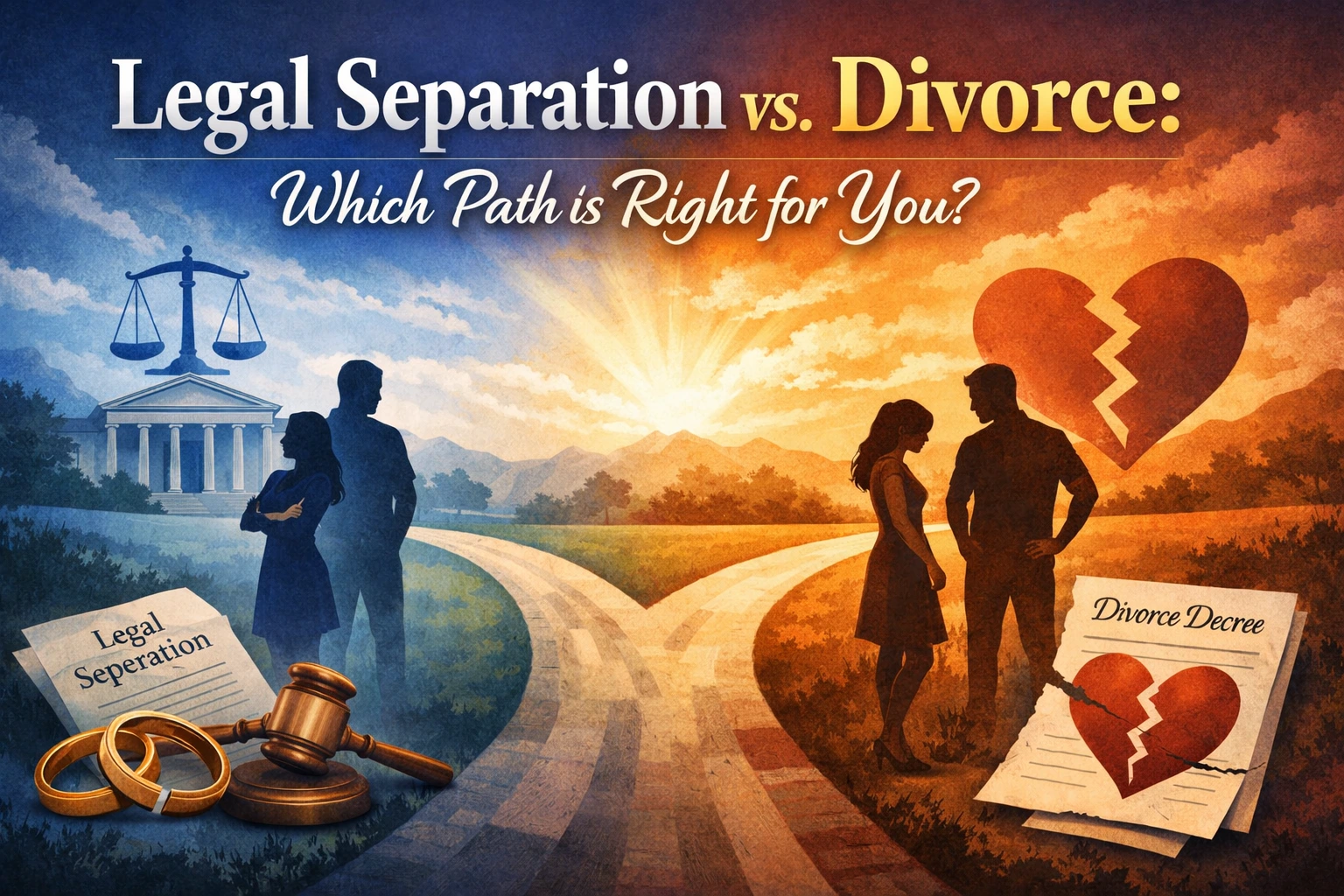
When a marriage ends, couples must choose between legal separation and divorce. Understanding their differences is essential, as this decision shapes your finances, family, emotions, and future.
Table of Contents:
- Introduction to Legal Separation and Divorce
- What Is Legal Separation? (Detailed Explanation)
- What Is Divorce? (Complete Overview)
- Core Difference Between Legal Separation and Divorce
- Legal Processes Involved in Each Option
- Financial Implications and Long-Term Impact
- Child Custody, Support, and Parenting Considerations
- Emotional and Psychological Effects
- Religious, Cultural, and Personal Influences
- Advantages and Disadvantages of Legal Separation
- Advantages and Disadvantages of Divorce
- Situations Where Legal Separation Makes More Sense
- Situations Where Divorce Is the Better Option
- Frequently Asked Questions (5 Key Questions Answered)
- Final Thoughts and Legal Guidance
1. Introduction to Legal Separation and Divorce
Marriage is both a legal contract and a personal promise. It is grounded in trust, shared responsibilities, and future plans. When a marriage ends, couples face emotional challenges and important legal choices. These choices shape what happens next. Deciding between legal separation and divorce is a big step. It’s not just about legal terms; it affects your marital status, finances, parenting, and emotional well-being. Many people want to find the best option for their situation. With legal separation, spouses live apart but remain married. Divorce ends the marriage completely. This difference matters. Legal separation can let couples keep shared health insurance, tax benefits, or retirement plans. Divorce gives a clear legal break and allows both people to remarry.
Legal separation offers flexibility and may be temporary. It gives couples time to reflect and possibly work things out. Divorce is permanent and brings closure. For families with children, careful planning for custody, visitation, and support is essential. Some choose legal separation to retain financial protections. Others want the finality of divorce. Personal values and beliefs can influence the decision. Some may choose not to divorce for religious or cultural reasons. Both options involve living apart and settling financial and custody matters. They differ in legal status and long-term effects. Learning about these differences and consulting a family law attorney helps you make the best decision.
Legal separation is a court-recognized process in which a married couple chooses to live separately while remaining legally married.
2. What Is Legal Separation? (Detailed Explanation)
- Division of marital assets and debts
- Child custody and visitation schedules
- Child support obligations
- Spousal support (alimony)
- Responsibility for ongoing expenses
Why Do Couples Choose Legal Separation?
1. Time for Reflection
2. Financial Benefits
- Stay on the same health insurance plan.
- Retain tax benefits
- Preserve retirement or pension rights.
3. Religious or Cultural Beliefs
4. Trial Period Before Divorce
Important Limitation
- You are still legally married.
- You cannot remarry
3. What Is Divorce? (Complete Overview)
Key Elements of Divorce
- Division of assets and liabilities
- Child custody and parenting plans
- Child support
- Spousal support
Types of Divorce
2. Uncontested Divorce
Finality of Divorce
- Permanently ends the marital relationship.
- Eliminates most legal ties between spouses
- Provides a clean legal and financial break
4. Core Difference Between Legal Separation and Divorce
1. Legal Status
- Legal Separation: Still married
- Divorce: Marriage terminated
2. Ability to Remarry
- Legal Separation: Not allowed
- Divorce: Allowed
3. Permanence
- Legal Separation: Can be reversed or modified
- Divorce: Permanent
4. Financial Connection
- Legal Separation: Some ties remain
- Divorce: Most ties are severed
5. Flexibility
- Legal Separation: Offers more flexibility for reconciliation
- Divorce: Represents final closure
5. Legal Processes Involved in Each Option
- Filing a petition with the court
- Negotiating terms (custody, support, assets)
- Court approval of the separation agreement
- Implementation of court orders
Divorce Process
- Filing for divorce
- Serving papers to the other spouse
- Negotiation or litigation
- Court judgment and final decree
6. Financial Implications and Long-Term Impact
Health Insurance
- Legal Separation: Coverage may continue
- Divorce: Coverage typically ends
Taxes
- Legal Separation: May file jointly (depending on jurisdiction)
- Divorce: Must file separately
Property Division
Retirement and Benefits
7. Child Custody, Support, and Parenting Considerations

- Physical custody
- Legal custody
- Visitation schedules
Stability for Children
Co-Parenting
- Clear communication
- Consistency
- Focus on the child’s best interests.
8. Emotional and Psychological Effects
Emotional Impact of Legal Separation
1. Offers Time and Space for Reflection
- Individuals may use this time to reflect on personal needs and relationship dynamics.
- It gives time for counseling or possible reconciliation.
- Physical separation can ease daily tension and decrease emotional intensity.
2. May Reduce Immediate Pressure
- There is no immediate need to fully “let go” of the marriage.
- A lack of closure makes the transition gradual.
- Couples can adjust gradually to living apart.
3. Can Create Emotional Uncertainty
- Uncertainty about the future may cause concern.
- One may hope for reconciliation while the other moves on.
- Extended uncertainty can delay emotional closure.
4. Lingering Emotional Attachment
- Individuals may struggle to fully detach.
- Boundaries blur, especially with frequent communication.
- Uncertainty and mixed feelings may persist.
Emotional Impact of Divorce
1. Provides a Sense of Closure
- Legal finality helps people accept the end of the marriage.
- It eliminates ambiguity about the future.
- It allows both parties to begin rebuilding their lives independently.
2. Allows for Emotional Healing and Growth
- Emotional energy can shift from the past to the future.
- Individuals may rediscover their identity outside the relationship.
- Opportunities for personal growth and new relationships become possible.
3. May Involve Grief and Loss
- Loss of companionship, shared goals, and family structure
- Feelings of sadness, anger, guilt, or even relief
- A grieving process similar to mourning
4. Adjustment Challenges
- Changes in living arrangements and financial responsibilities
- Navigating co-parenting relationships
- Adapting to a new social identity
Comparing Emotional Outcomes: Legal Separation vs. Divorce
- Legal separation often delays final emotional resolution, offering flexibility but sometimes prolonging stress.
- Divorce brings immediate emotional intensity but often leads to clearer long-term healing.
- Legal separation = emotional pause with uncertainty
- Divorce = emotional impact with eventual clarity
Impact on Children and Family Dynamics
Legal Separation and Children
- May provide a sense of stability if parents remain cooperative
- However, ongoing uncertainty can confuse children about the family’s future.

- Offers a clearer structure and defined roles
- Initial emotional distress may be higher, but consistency can support long-term adjustment.
The Importance of Emotional Support
Professional Support Options
- Marriage or individual counseling
- Family therapy for children
- Support groups for separated or divorced individuals
Personal Support Systems
- Friends and family
- Faith or community networks
- Healthy coping strategies (exercise, journaling, mindfulness)
9. Religious, Cultural, and Personal Influences
Religious Beliefs
Cultural Expectations
Personal Values
10. Advantages and Disadvantages of Legal Separation
- Maintains marital status
- Preserves financial benefits
- Allows time for reconciliation
- Aligns with religious beliefs
Disadvantages
- No ability to remarry
- Continued financial ties
- Potential emotional limbo
11. Advantages and Disadvantages of Divorce
Advantages
- Complete legal independence
- Ability to remarry
- Clear financial separation
- Emotional closure
Disadvantages
- Loss of benefits (insurance, tax advantages)
- Emotional difficulty
- Legal costs and complexity
12. Situations Where Legal Separation Makes More Sense
- You are uncertain about ending the marriage.
- You want to preserve financial benefits.
- You have religious objections to divorce.
- You want a structured trial separation.
13. Situations Where Divorce Is the Better Option
- The relationship is beyond repair.
- One or both spouses want to remarry.
- There is ongoing conflict or toxicity.
- A clean financial and legal break is needed.
14. Frequently Asked Questions (5 Key Questions Answered)
2. Can you date other people during legal separation?
3. How long can you stay legally separated?
4. Is legal separation required before divorce?
5. Which option is less stressful: legal separation or divorce?
15. Final Thoughts and Legal Guidance
Choosing between legal separation and divorce is a big decision. Knowing the differences can help you evaluate your options and choose the path that best fits your emotional, financial, and legal needs.

- Compassionate, client-focused representation
You deserve clear answers, protection, and expert guidance as you plan for your future.
Contact Tess House Law today to schedule a consultation and take the first step toward making the best decision for you and your family.