
Table of Contents:
- Introduction
- Understanding Divorce Without Children in Texas
- Residency and Eligibility Requirements
- Grounds for Divorce in Texas
- Step-by-Step Guide: How to File for Divorce Without Children
- Required Forms and Documents
- Property Division in a No-Children Divorce
- Spousal Maintenance (Alimony) Considerations
- Filing Fees, Timelines, and Court Procedures
- Common Mistakes to Avoid
- Do You Need a Lawyer for a Divorce Without Children?
- Five Common Questions About How to File for Divorce Without Children
- Final Decree of Divorce: What to Expect
- Life After Divorce: Legal and Financial Next Steps
- Why Choose Tess House Law Firm
- Strong Call to Action
1. Introduction
Divorce can be emotionally challenging, even without children. Though many assume it is straightforward, Texas still requires strict legal procedures. Understanding the process helps avoid delays, mistakes, and stress.
2. Understanding Divorce Without Children in Texas

- Division of marital property and debt
- Spousal maintenance (if applicable)
- Legal grounds for divorce
- Proper filing and court approval
3. Residency and Eligibility Requirements
Before learning how to file for divorce without children, you must confirm that you meet Texas residency requirements.
- One spouse must have lived in Texas for at least six months, and
- One spouse must have lived in the county where the divorce is filed for at least 90 days.
4. Grounds for Divorce in Texas
No-Fault Divorce
Fault-Based Divorce
- Adultery
- Cruelty
- Abandonment
- Felony conviction
- Living apart for at least three years
5. Step-by-Step Guide: How to File for Divorce Without Children
Step 1: Prepare the Original Petition for Divorce
- Names of both spouses
- Date of marriage and separation
- Grounds for divorce
- Statement confirming no children
Step 2: File the Petition with the Court
Step 3: Serve the Other Spouse
Step 4: Waiting Period

Step 5: Draft the Final Decree of Divorce
Step 6: Court Approval
6. Required Forms and Documents
Paperwork is often misunderstood and critical in Texas divorces without children. Courts are strict about format and legal accuracy. Even minor mistakes can cause delays, rejections, or an unenforceable divorce.
Original Petition for Divorce
The Original Petition for Divorce is the legal document that officially starts your divorce case. It is filed by the spouse initiating the divorce (called the Petitioner) with the district clerk in the appropriate county.
- Full legal names of both spouses
- Date and place of marriage
- Confirmation that no children were born or adopted during the marriage
- Statement that no spouse is currently pregnant
- Residency confirmation for Texas and the filing county
- Grounds for divorce (usually “insupportability” in no-fault cases)
- Request for property division and debt allocation
Although it may look straightforward, errors in the petition, such as incorrect residency language or vague property requests, can lead to court rejections or disputes later in the case.
This document defines the scope of your divorce. Anything left out or worded incorrectly can limit what the judge is allowed to grant in the Final Decree.
Civil Case Information Sheet
The Civil Case Information Sheet is an administrative form required by many Texas counties at the time of filing. While it does not decide the outcome of your divorce, it helps the court system properly classify and track your case.
- Type of case (divorce without children)
- Names of parties involved
- Contact information
- Case category and court assignment
Some counties now integrate this information electronically, but others still require a separate form.
If this form is missing or filled out incorrectly, your filing may be rejected before the case even begins.
Waiver of Service or Return of Service
Waiver of Service
A Waiver of Service is signed by the responding spouse, confirming that they received notice of the divorce and do not require formal service by a process server or sheriff.
- Must be signed after the petition is filed
- Must be notarized
- Cannot waive the right to receive the Final Decree unless specifically stated
Return of Service
If your spouse does not sign a waiver, they must receive legal papers from a process server or sheriff (called being ‘served’). The process server or sheriff then completes a Return of Service, which is filed with the court to prove your spouse received these papers.
Improper service is one of the most common reasons Texas divorce cases are delayed or dismissed.
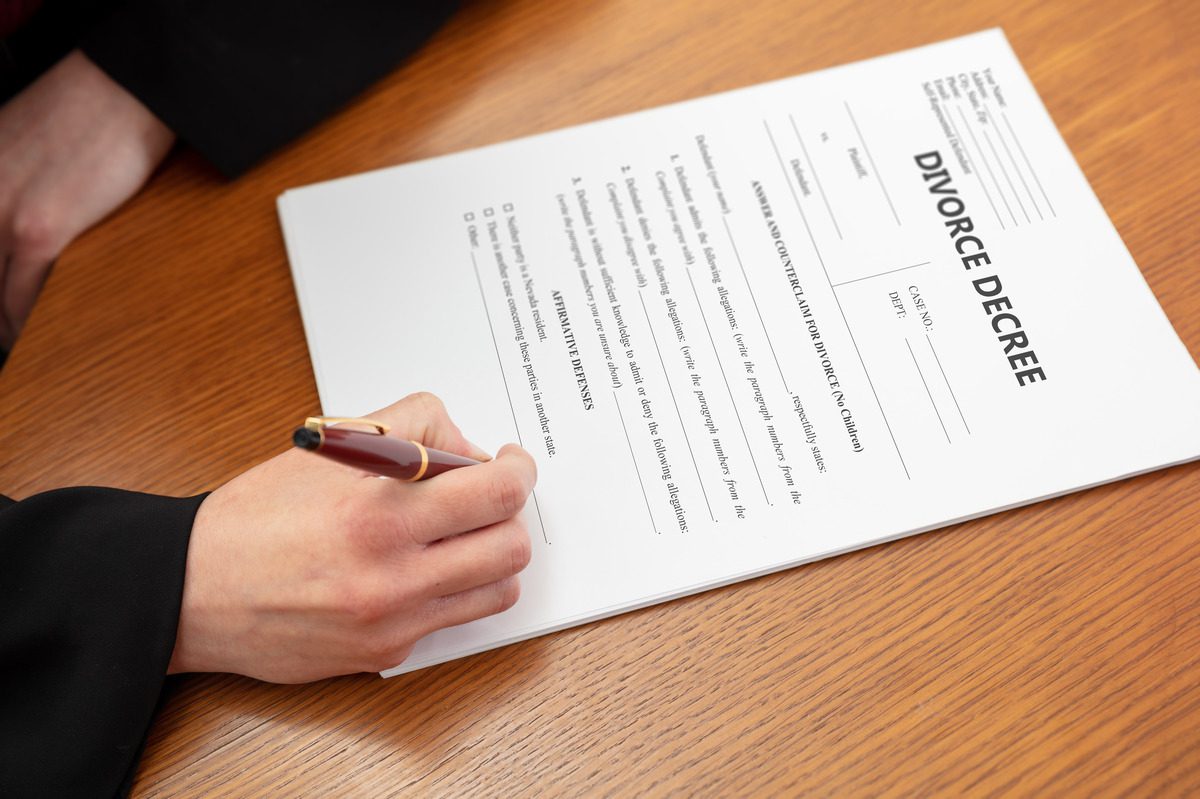
Final Decree of Divorce
The Final Decree of Divorce is the legal document that officially ends the marriage and explains what happens to all your property, debts, and other issues after the divorce.
- Confirmation that the marriage is dissolved
- Detailed division of property and debts
- Deadlines for transferring titles or refinancing accounts
- Any spousal maintenance obligations (if applicable)
- Name change provisions (if requested)
The decree must be very specific. Vague language can make enforcement impossible and lead to future legal disputes.
Once signed by the judge, the Final Decree is binding. Mistakes can be extremely difficult and expensive to fix later.
7. Property Division in a No-Children Divorce

- Real estate
- Vehicles
- Bank accounts
- Retirement accounts
- Business interests
8. Spousal Maintenance (Alimony) Considerations
What Is Spousal Maintenance in Texas?
Spousal maintenance (often referred to as alimony) is a court-ordered payment from one spouse to the other after divorce. Its purpose is temporary financial support, not lifelong income replacement.
Threshold Requirement: Inability to Meet Minimum Needs
Before a court even considers spousal maintenance, the requesting spouse must prove that they cannot meet their minimum reasonable needs after the divorce, even after receiving a fair share of marital property.
Situations Where Spousal Maintenance May Apply
1. Marriage Lasting at Least 10 Years
- Lack sufficient property to meet basic needs, and
- Made diligent efforts to earn income or develop job skills
2. Disability of a Spouse
- Medical documentation
- Ability to work now and in the future
- Impact of the disability on earning capacity
3. Family Violence Convictions
If the paying spouse was convicted of or received deferred adjudication for family violence within two years of filing for divorce or during the divorce itself, the court may award maintenance.
- The 10-year marriage requirement does not apply.
- The court may consider safety and financial stability.
9. Filing Fees, Timelines, and Court Procedures
When learning how to file for divorce without children in Texas, many people underestimate the financial costs and time commitment involved. While divorces without children are often less complex than those involving custody disputes, they are not free, instant, or automatic.
Understanding the full picture can help you plan properly and avoid surprises.
Filing Fees in Texas Divorce Cases

- Filing fees typically range from $250 to $350, depending on the county.
- Fees are non-refundable, even if the case is dismissed or delayed.
- Additional local court fees may apply.
Additional Divorce-Related Costs
Service of Process
- Process server or sheriff fees generally range from $75 to $150
- Out-of-county or difficult service can increase costs.
Document Preparation Costs
Preparing legally sound divorce documents often involves more than filling out forms.
- Drafting customized legal pleadings
- Property division language
- Spousal maintenance provisions
- Compliance with local court rules
Court Appearance Expenses
Even in uncontested divorces without children, at least one court appearance is often required.
- Time off work
- Travel and parking
- Attorney appearance fees (if represented)
10. Common Mistakes to Avoid
- Incorrectly completing forms
- Failing to disclose all assets and debts
- Assuming verbal agreements are enforceable
- Ignoring tax consequences
11. Do You Need a Lawyer for a Divorce Without Children?
- Ensure accurate paperwork
- Protect your property rights.
- Prevent costly future disputes.
12. Five Common Questions About How to File for Divorce Without Children
1. How long does a divorce without children take in Texas?
2. Can I file for divorce without my spouse’s consent?
3. Is mediation required?
4. Do we have to go to court?
5. Can we divide the property however we want?
13. Final Decree of Divorce: What to Expect
14. Life After Divorce: Legal and Financial Next Steps
- Updating your will and beneficiaries
- Refinancing jointly held property
- Closing joint accounts
15. Why Choose Tess House Law Firm

16. Strong Call to Action
If you are considering divorce and want to fully understand how to file for divorce without children in Texas, do not leave your future to chance. The legal decisions you make today can impact your financial security and peace of mind for years to come.
Contact Tess House Law today to schedule a consultation. Let our experienced Texas divorce attorneys protect your rights, streamline the process, and help you move forward with confidence. Your next chapter deserves strong legal support. Call us now.