

When an adoption is finalized, one of the most emotionally challenging questions a family may have is whether can biological parent regain custody after adoption. In most cases, a final adoption permanently changes the legal connection between parent and kid. The adoptive parents become the child’s legal parents, and the prior parental rights of the birth parent normally terminate. But the complications are fraud, extortion, procedural issues, or a timely legal challenge.
Table of Contents:
- Can A Biological Parent Regain Their Custody Back After Adoption?
- What Happens To Birth Parent’s Rights After An Adoption?
- Can A Birth Parent Change Their Mind Before The Adoption Is Finalized?
- Can You Undo a Final Adoption?
- Reasons to Contest an Adoption
- Rules for Texas Adoption Challenge
- Texas Reinstatement of Parental Rights
- The Right to Custody for Birth Parents and Open Adoption
- What If The Adoptive Parents Can No Longer Care For The Child?
- What Birth Parents Must Do to Fight an Adoption?
- What to Expect When You’re Expecting
- Five FAQs
- Call Tess House Law Firm
Each state has its laws regarding adoptions, and the guidelines outlined below include information specific to Texas. If you are involved in a dispute about an adoption, you should seek guidance about the specific court orders, dates, documents, and circumstances.
1. Can A Biological Parent Regain Their Custody Back After Adoption?
Generally, once a legal adoption is completed, the biological parent cannot just reclaim possession.
A final adoption is supposed to form a permanent legal family. Upon the entry of the final order of adoption, the adoptive parents generally acquire all of the rights and responsibilities that a natural parent would normally have, including providing for the care, education, and medical and day-to-day decisions for the child.
At the same time, the legal relationship that existed between the birth parent and the child is generally ended or otherwise legally resolved. At the same time the existing legal relationship between the birth parent and child is usually severed or otherwise resolved in a legal manner. or otherwise legally addressed.
That is to say, a biological parent usually cannot wait months or years and then come back and ask for custody just because:
- They have more cash.
- They now have a stable place to live.
- They regret they agreed to the adoption.
- They went to rehab. They went to treatment.
- They are different.
- They think they can parent now.
They disagree with the decisions made by the adoptive parents.
They are the ones the child has been asking about. Such events may be personally significant but usually do not nullify a final adoption.
The question “can biological parent regain custody after adoption?” usually has a straightforward answer: only before a valid final adoption or if there is a recognized legal basis for challenging or setting aside that adoption.
The precise answer depends a lot on whether the adoption is still pending, whether parental rights have already been terminated, how consent was gained, how much time has gone by, and the law of the state concerned.
2. What Happens To Birth Parent’s Rights After An Adoption?
It is important to understand the legal implications of adoption in understanding whether a birth parent can get custody back.
Adoption is far more than an arrangement about who has custody.
In the usual custody case, both biological parents can have parental rights even if one parent has physical possession of the child. Often custody orders are changed if the law requires it when circumstances change.
Adoption is a major change in the legal landscape.
Upon adoption, the child is placed in the legal custody of the adoptive parent(s). As a rule, the legal relationship between a child and a former parent ceases when the previous parent’s parental rights have been terminated or formally relinquished.
In Texas, for example, a parent’s rights can be terminated prior to an adoption by voluntary relinquishment or through a court procedure. Texas law also provides that additional parental consent is not required before the adoption proceeds when an affidavit of relinquishment authorizes the Texas Department of Family and Protective Services or a licensed child-placing agency to place the child for adoption under the applicable circumstances.
Termination of parental rights may impair a parent’s capacity to:

- Make educational choices.
- Take medical decisions.
- Select the child’s residence.
- Exercise possession or visiting rights.
- Obtain custody. custody.
- Affect the training of the young.
Object to later decisions that legally belong to the adoptive parents.
The effects are such that there are statutory requirements in adoption proceedings to preserve the legal rights of all parties.
3. Can A Birth Parent Change Their Mind Before The Adoption Is Finalized?
Maybe. It is very crucial to distinguish between a pending adoption and a final adoption.
Biological parents often have rights to revoke a relinquishment or withdraw consent before the adoption is finalized. Whether or not a revocation is permissible depends on the type of document signed, the language used, the statute involved, and the timing.
For example, Texas law governs affidavits of voluntary relinquishment of parental rights. For example, normally a parent cannot sign an affidavit until 48 or more hours following the child’s birth. Texas law recognizes several kinds of relinquishment wording, including documents that may be reversible, irrevocable, or irrevocable for a length of time. If the relinquishment is revocable, the Act requires language indicating the revocation must take place prior to the 11th day after execution.
But it doesn’t imply every Texas birth parent automatically gets a right to alter their mind for 11 days.
It’s the specific document. Some surrenders are expressly irrevocable or become such under certain conditions. Other consent rules may apply for agency, private placement, stepparent adoption, or other adoption arrangements.
If you are considering reversing an adoption, it is important to consult an attorney promptly rather than relying solely on a vague deadline you found online.
Delay can have serious consequences for your legal options.
4. Can You Undo a Final Adoption?
Withdrawing consent while an adoption is still pending is not the same as reversing a finalized adoption.
The adoption order is intended to provide stability and permanence for children. But courts normally don’t undo adoptions just because a birth parent has changed his or her mind.
Rather, the challenger to an adoption must typically have a legally cognizable basis for appealing the adoption order.
Possible issues can include claims involving:
- Fraud.
- Counterfeit.
- Coercion.
- Coercion.
- No legal consent.
- Serious procedural mistakes.
- Failure to provide proper notice.
- Legal venue.
- Misrepresentation in the adoption proceeding.
Whether any of these circumstances can really void an adoption depends on the law of the state, the proof, and the applicable filing deadlines.
A birth parent’s regret alone usually isn’t enough. Likewise, proof that a birth parent’s life has improved following an adoption does not always render an otherwise valid adoption invalid.
In an adoption challenge, the court is not concerned with whether the biological parent would be a suitable parent today. One key issue is whether there is any lawful basis at all to disturb the final adoption decree.
5. Reasons to Contest an Adoption
If someone asks, “Can a biological parent regain custody after adoption?” The next inquiry should typically be, “Why does the biological parent think the adoption was legally invalid?”
There will be lots of accusations, I bet.
Fraud
Fraud. A person who knowingly makes a false statement material to an agreement or to a court case with the intent to induce the other party to agree or to deceive the court may be sued for fraud.
Maybe a birth parent would say they were lied to on purpose about the papers they signed.
But a simple misunderstanding of the potential emotional ramifications of adoption does not typically amount to fraud.
It is important to have proof. Text messages, emails, signed documents, witness testimony, court documents, agency documents, interactions between the parties and much more can all come into play.
Coercion or Compulsion
There has to be a real willingness to take on board.
A birth parent may claim that the consent was not given voluntarily but was obtained through illegal pressure, threats or coercion.
In law duress is not the same as emotional distress. Adoption decisions can be difficult, emotional and stressful.Even if there was emotional coercion, it does not necessarily follow that the assent was legally involuntary.
A lawyer must review what was said, what threats or promises were made, who was involved, and what the parent understood before signing.
False or Fraudulent Documents
A falsified signature or paper not performed properly can cause major problems.
Adoption and termination papers often must meet statutory standards. Not meeting those conditions may be relevant depending on the defect and the applicable law.
Failure to provide required notice
Disputes over adoption can include a biological parent, generally an alleged or suspected father, who asserts that the adoption was made without the notification needed by law.
The actual need for notice was dependent on a variety of factors including the paternity status, the registration requirements, any prior court action, and actions taken by the parent prior to the adoption.
Want of Jurisdiction
A court must have jurisdiction to hear a case. Jurisdictional issues in adoption cases can get particularly ugly when more than one state is involved.
Jurisdiction is very sophisticated, and anyone trying this kind of challenge should get legal guidance right away.
6. Rules for Texas Adoption Challenge

Texas law imposes strict limitations on challenging finalized adoption orders.
Texas Family Code Section 162.012 generally prohibits an attack on the legality of an adoption order more than six months after the date the order was signed.
That deadline emphasizes how critical timing can be.
If a birth parent feels that fraud, coercion, lack of notice, or another substantial legal defect happened, they should not expect that the fault may be corrected at any time when they are emotionally ready to do so.
Procrastination can prevent possible cures. The law may take the view that a particular claim constitutes an attack on an adoption order, and whether the law has anything to say about a particular case may be a complex issue.
Therefore, anyone thinking of a challenge should have a lawyer review it:
- THE ORDER OF ADOPTION.
- Order to terminate.
- The affidavit of renunciation.
- Permission forms
- Papers to watch.
- Maintenance history.
- Agency papers.
- Court transcripts, relevant.
- Dates when each paper was signed.
- Consent communication.
A day or two or a week or two can occasionally make a big legal impact.
7. Texas Reinstatement of Parental Rights
Texas law has a process that may allow for the restoration of parental rights in certain limited situations after an involuntary termination.
But this law is not to be confused with a right to retrieve a child after adoption.
Texas law provides for reinstatement of parental rights. Under Texas Family Code Section 161.302, a former parent may petition for reinstatement of parental rights if certain statutory conditions are met.
Such conditions include:
- The termination came in a case brought by the Department of Family and Protective Services.
- The termination order has been in effect for a minimum of two years, as required by statute.
- The youngster is still unadopted.
- Currently, there is no agreement to place the kid for adoption.
The key is the phrase “the child has not been adopted.”
This unique provision may provide a pathway for Texas parents who have had their rights terminated to potentially qualify for restoration provided the kid remains unadopted and the other statutory requirements are completed.
But the reinstatement procedure does not offer a broad mechanism for the removal of children from the custody of adoptive parents after the adoption is finalized.
So those looking for info on biological parents getting custody back after adoption should distinguish between:
- The restoration of parental rights applies only if the child has not been adopted.
- Challenging a final adoption order that has already established a new legal parent-child connection is a complex legal matter.
They are quite different legal matters.
8. The Right to Custody for Birth Parents and Open Adoption
Not usually. Open adoption allows a birth parent to communicate or have contact with an adopted kid.
Contact may include (depending on the arrangement):
- Letters from the editor
- Pictures.
- Mails.
- Calls.
- Video call.
- Visits in real life.
- Updates from Adoptive Families.
Open adoption, however, is not usually characterized by the birth parent remaining a joint legal parent.
Although the biological parent no longer has the legal rights of custody, he/she can continue to have a crucial emotional relationship with the child.
This means that in most cases a birth parent cannot use an open adoption agreement to ask for the child back.
Some termination contracts provide for limited post-termination contact, which is recognized under Texas law. But this interaction does not alter the finality of the termination or adoption ruling and does not automatically reinstate parental standing.
Therefore, open adoption should be conceptualized as an ongoing partnership or dialog, rather than shared legal custody.
9. What If The Adoptive Parents Can No Longer Care For The Child?
Another widespread misconception is when adoptive parents have major troubles following the adoption.
If you are an adoptive parent:
- Dies
- Falls seriously ill.
- Runs into financial trouble.
- Divorces.
- Is imprisoned.
- The child is no longer able to be cared for safely.
Does custody revert back to the biological parent automatically? Not usually.
When the adoption is completed the adoptive parent becomes the child’s legal parent.
When an adoptive parent cannot care for the child, custody disputes are generally resolved in the usual manner of the legal system applicable to that adoptive family, not by a prompt reinstatement of the rights of the former parent who has been terminated.
Depending on the circumstances, the person involved can be different and can include a relative, guardian, conservator or government body.
In rare cases, a former biological parent may desire a legal role; however, the status of a former biological parent alone generally does not nullify the legal effect of the adoption.
10. What Birth Parents Must Do to Fight an Adoption?
When a birth parent believes an adoption shouldn’t have happened, they must act quickly.
Gather All Documentation
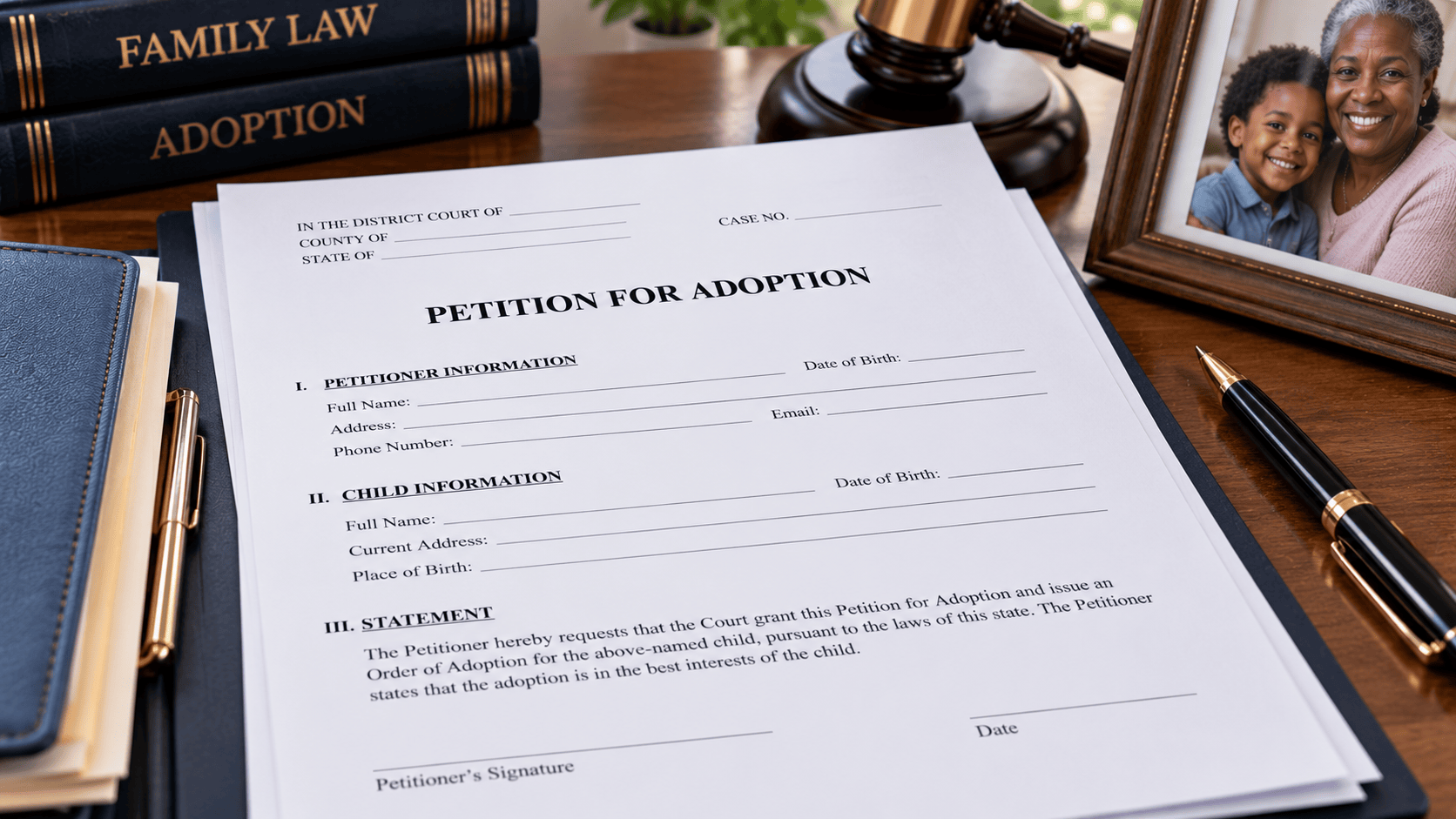
Photocopy:
- Adoption papers.
- Surrender paperwork.
- Consent forms.
- Judgment orders.
- Notices.
- The agency point of contact.
- e-mail[s]
- Text Messages.
- Letters:
- Medical or hospital records of the adoption.
- Documents for signature and date.
Create a Timeline
Write down:
- When the baby came into the world.
- Adoption was brought up.
- At every doc presentation.
- When surrender or assent was signed.
- Who was there?
- What was said before the signing:
- Whether the parent had counsel.
- When the termination came.
- That’s when it became official.
- Date when the parent first became aware of any apparent concern.
Dates might be critical.
Communications
Don’t delete text messages, emails, voicemails, social media messages, or any other correspondence.
If you are claiming duress, deception, lack of notice, or fraud, those conversations may be proof.
Don’t get into arguments
It is understandable that a parent who feels an adoption was illegitimate may be furious or desperate.
But trying to grab the child without legal approval, threatening the adoptive parents, showing up at their house regularly, or breaking existing court orders could lead to more legal trouble.
All challenges should be taken up in the right court procedures.
Call an Adoption or Family Law Attorney Right Away
Adoption proceedings can have notoriously severe filing deadlines.
The lawyer will have to decide if there is a legally plausible claim not merely if the situation feels unfair.
11. What to Expect When You’re Expecting?
Adoptive parents can sometimes be frightened by a birth parent who says he or she wants the child back.
An “I changed my mind” declaration does not automatically nullify an adoption.
If the adoption has been finalized, adoptive parents should get a copy of the final order and consult with family law counsel if a legal threat has been made.
Record of:
- Final adoption order.
- Orders of termination.
- Consent Forms.
- Records of the agency.
- Communication with birth parent
- Any post-adoption contact arrangement.
If the biological parent makes threats to take the kid without permission or participates in conduct that poses a bona fide safety issue, adoptive parents should seek legal guidance immediately on protective measures that may be available.
At the same time, not every emotional birth parent exchange should automatically be viewed as a legal action. Adoption can have lifelong emotional implications for everybody concerned.
An attorney can assist you tell the difference between an emotional problem and a real legal issue.
Understanding these distinctions helps determine which option aligns with your goals.
12. Frequently Asked Question
1. Can a biological parent regain custody after adoption just because he changed his mind?
No, not much. If the adoption is final, the birth parent’s change of mind usually does not reverse the adoption.
The finalization confers legal parental status on the adoptive parents. A former parent generally must find a valid legal reason, such as a severe flaw with the consent process, notice, fraud, or some other fault, to challenge an adoption.
The time available to mount such a task may likewise be very short.
2. Can life improve for a birth parent of an adopted child?
Generally, a final adoption is not reversed because of improvement in a birth parent’s circumstances.
For example, a birth parent might later:
- Get stable housing.
- Secure job.
- Complete substance abuse therapy.
- Walk out from an abusive relationship.
- Improve their financial standing.
- Finish counseling.
- Get ready to be a parent.
Those accomplishments can be quite personally important, but the adoption itself doesn’t usually evaporate when the situation of the original parent has altered.
If parental rights have been involuntarily terminated and the kid has not been adopted, Texas provides a limited statutory mechanism that may allow reinstatement under certain conditions. That opportunity for reinstatement, however, is not applicable once the kid has been adopted.
3. Can a Birth Mother Change Her Mind on Adoption?
It is contingent upon the stage of the adoption, the paperwork signed, and state law.
Texas law requires that records of voluntary relinquishment meet certain conditions. Some documents may be revocable; others may be irreversible or irrevocable for a length of time. If a Texas relinquishment is revocable, the statute requires notification of revocation to be given by the 11th day after execution.
“A parent should never assume that a general revocation period applies to their case,”
The precise document should be reviewed immediately by an attorney.
4. Can a Birthfather Fight an Adoption?
Possibly, depending on the circumstances.
The legal rights of a biological father may depend on such things as:
- Legal establishment of fatherhood.
- If he were a supposed father.
- If he’d signed an acknowledgment.
- If filed with a concurrent paternity registration.
- Whether the required by law notice has been served on him.
- Whether he had backed the child or tried to help him.
- If his rights as a parent were terminated.
- Whether the adoption is already final.
- Time went by.
These kinds of cases can be exceedingly fact-specific.
Two people may be biologically related, but that doesn’t mean you can undo a completed adoption.
5. How Long Do Birth Parents Have to Fight an Adoption in Texas?
Generally, Texas Family Code Section 162.012 provides that an adoption order may not be disputed after the expiration of six months from the date the order was signed.
Strict procedural standards govern adoption challenges. Anyone who suspects an adoption was obtained by fraud, coercion, lack of notification, or some other major legal fault should seek legal advice quickly.
Do not presume that waiting until a later period will save the right to contest the adoption.
Contact Tess House Law Firm About Adoption and Parental Rights
Adoption, termination of parental rights, and custody issues can affect a family for the rest of their lives. If you are a birth parent concerned that your rights were unlawfully terminated, an adoptive parent facing a challenge to an adoption, or a family member attempting to understand what legal choices are still open, you should not assume how adoption law will work.
Tess House Law Firm can assist you in understanding your rights, studying the documents involved in adoption and termination, evaluating critical deadlines, and establishing what legal remedies may be available under the circumstances.

“Can biological parents get custody back from adoption?” If that’s your question, time may be one of the most significant things for you.
Contact Tess House Law today to schedule a consultation to talk about your case and what the next actions to take are. The sooner you get your legal records and court history analyzed, the sooner you will know where you stand and what possibilities the law may afford.